Ebook Calvin
We constantly commit to keep as well as respect individuals needs of publications. Books as a fantastic points to be sources on the planet are always required, anywhere and also whenever. When you have more resources to take, publications still hold the large powers. Among the powerful publications that we will extend currently is the Calvin It is seemly a book that supplies a various statement as others. When many people aim to get this type of publication with that said interesting subject, this publication comes disclosed for you.
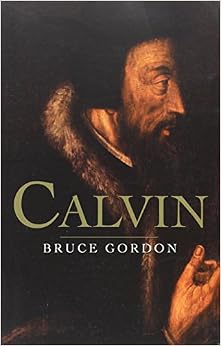
Calvin

Ebook Calvin
Reviewing is essential for us. By reading, we can really feel numerous advantages such as improving the understanding concerning other life and also other world life. Reviewing can be to check out something, every little thing to review. Publications, paper, story, unique, and even guides are the examples. The materials to review likewise include the brochures of the fiction, scientific research, national politics, as well as other sources to discover.
One that currently comes to be a talking source is Calvin This is exactly what you could feel when looking or reviewing the title of this book. This publication has efficiently influence the readers from the many countries to obtain the perception. This is why it tends to be one of the most much-loved books to check out just recently. Will you be one of them? It's depending on your option to select this book as yours or otherwise.
Yeah, the method is by connecting to the web link of the book that are having offered. From such, you can reserve making deal and download it. It will depend upon you and also the link to check out. Calvin is among the popular publications that are released by the specialist publisher worldwide. Many individuals recognize more about the book, particularly this excellent writer work.
Are you interested? Just discover guide currently and also get what you call as ideas. Motivations could have numerous subjects as well as systems. The expertise, experience, realities, and home entertainment will enter into the inspirations. This publication, Calvin, has that wonderful inspiration that the writer makes to remind you concerning guide web content. It also includes the impressive functions of a publication to obtain while in every reading state.
During the glory days of the French Renaissance, young John Calvin (1509-1564) experienced a profound conversion to the faith of the Reformation. For the rest of his days he lived out the implications of that transformation—as exile, inspired reformer, and ultimately the dominant figure of the Protestant Reformation. Calvin’s vision of the Christian religion has inspired many volumes of analysis, but this engaging biography examines a remarkable life. Bruce Gordon presents Calvin as a human being, a man at once brilliant, arrogant, charismatic, unforgiving, generous, and shrewd. The book explores with particular insight Calvin’s self-conscious view of himself as prophet and apostle for his age and his struggle to tame a sense of his own superiority, perceived by others as arrogance. Gordon looks at Calvin’s character, his maturing vision of God and humanity, his personal tragedies and failures, his extensive relationships with others, and the context within which he wrote and taught. What emerges is a man who devoted himself to the Church, inspiring and transforming the lives of others, especially those who suffered persecution for their religious beliefs.
Your recently viewed items and featured recommendations
›
View or edit your browsing history
After viewing product detail pages, look here to find an easy way to navigate back to pages you are interested in.
Product details
Paperback: 416 pages
Publisher: Yale University Press; Reprint edition (May 31, 2011)
Language: English
ISBN-10: 030017084X
ISBN-13: 978-0300170849
Product Dimensions:
5 x 1.2 x 8 inches
Shipping Weight: 15.5 ounces (View shipping rates and policies)
Average Customer Review:
4.0 out of 5 stars
32 customer reviews
Amazon Best Sellers Rank:
#474,403 in Books (See Top 100 in Books)
Book ReviewGordon, Bruce. Calvin. New Haven, CT, USA: Yale University Press, 2009.There is one figure from the reformation that above all intrigues me. His small frame, brilliant intellect, fiery temper, divinely empowered work ethic and zeal for the glory of God in Christ compel me to get to know this man. I was introduced to John Calvin not long after my conversion as my father directed me towards the Heidelberg Catechism and the reformed faith. I found myself agreeing with the doctrines of grace as found in the documents of the Synod of Dordt and ever since have always thought of Calvin as a rich resource. Bruce Gordon’s biography of Calvin came highly recommended by Tim Challies and since its release in 2009 I have vowed to read it. What I found in the book was not so much a window into Calvin’s theology but a door into what shaped the man and the historical context he found himself in. Although it wasn’t what I initially hoped for I think it was exactly what I needed. I have a much more informed understanding of the protestant struggles during the reformation and a different impression of the man Calvin. The biography never tried to make Calvin look better then he truly was. This quote proves that sufficiently: “There’s no doubt he struggled with Anger. However, one of his greatest strengths in his later career was an acute awareness that despite remarkable confidence in his calling and intellect he remained dangerously prone to moments of poor judgment on account of anger.â€There were clear informative gleanings and plenty of inspiration for faithful ministry in these pages. Some of the highlights for me were the importance of education, partnership, devotion, methodology, church government, unity, comforting the persecuted and suffering, common grace and dying well in the life and ministry of CalvinYoung CalvinAlthough it might seem strange to get into parenting right off the bat managing ones household is a qualification for being an overseer. Contrasting my upbringing with Calvin’s confirms some of my convictions of about classical education, discipline and responsibility. It was said that the youth were treated as “smaller adultsâ€. I’ve seen the adverse in our culture where children are immersed in entertainment, have very little responsibility, and have horrendous issues with honoring or submitting to authority. Some of the habits I’m still trying to rid myself could be attributed to my upbringing. As a pastor, it is my responsibility to instill in parents of the church that parenting and taking this task seriously is not an option: “train their children in the discipline and instruction of the Lord†Calvin was trained in grammar, logic, and rhetoric at a young age and no doubt set the foundation later ministry. Yes God can use any one of us but the lasting power of the Institutes, under God, was fruit of years of labor in Christian classical education.He worked hard at his university studies and there are still trustworthy men alive today who were on intimate terms with him at Orléans and who can testify that he often stayed up till midnight to study and ate hardly any supper in his eagerness for his work. Each morning when he woke, he would stay in bed for a few moments while he recalled to mind all that he had studied the previous day and mulled it over, so to speak. This is something I’ve thought much about. When I consider my athletic days of playing baseball I had one focus…to be the best…and I would do that at all costs. This means that I would be disciplined in what I ate, getting sleep, studying film, taking batting practice, and lift weights. I think Calvin had that same focus. Although my attention is divided with family, church, work and school, that central focus should remain the same, just on a different object: The glory of God. But at the same time I know there is much that I could do more of in terms of scripture memory, Greek studies, and prayer. Beza adds that Calvin’s regime of study prepared him for his ‘profound scholarship in the study of Holy Scripture, and helped him to develop the remarkable powers of memory which were so evident in his later life’.Calvin’s rigorous legal training left its imprint on every aspect of his life. It sharpened his mind to interpret texts and form precise arguments based on humanist methods; it provided him with a thorough grasp of subjects, ranging from marriage and property to crime. He was taught to frame legislation, write constitutions and offer legal opinions, all of which would loom large in his Genevan career. But the legacy was also intellectual. It was from the law that he would draw some of his most fundamental theological concepts, such as the Holy Spirit as ‘witness’, the nature of ‘justification’, God as ‘legislator’ and ‘judge’, and Christ as the ‘perpetual advocate’. This would all have a drastic effect on his commenting and sermons. I love to see God’s hand of providence in the lives of his saints. I see similar things in my life of how God has used experiences in my past to shape my gifting and desires.ConversionGod by a sudden conversion subdued and brought my mind to a teachable frame, which was more hardened in such matters than might have been expected from one at my early period of life. Having thus received some taste and knowledge oft rue godliness I was immediately inflamed with so intense a desire to make progress therein, that although I did not altogether leave off other studies, I yet pursued them with less ardour.â€This was similar to my conversion. I was playing minor league baseball when I was converted and no longer had the same desire to spend long hours in the gym, and batting cage. My affections were most satisfied studying the Bible, reading theology, and serving in my church.CallingCalvin was not looking to become a reformer or to head a church. He sought another place like Angoulême, where he could continue his studies and writing. ‘In short, while my one great object was to live in seclusion without being known, God so led me about through different turnings and changes that he never permitted me to rest in any place, until, in spite of my natural disposition, he brought me forth to public notice.’ God had other plansPartnership/ UnityI was struck by the labor Calvin put in to bring Unity to the Swiss, German, and French protestant churches. He was never shy to travel far and wide to present confessions of faith, to debate, to handle conflicts. He wrote voraciously to solve this problem. If there could only be unity among the churches, Kings, queens and princes were be more apt to work together and see the protestant faith as more appealing and ease the persecution spread the printing of Bibles, books and tracts and the gospel would go forward. What the events of the 1540s clearly demonstrate is that Calvin never regarded his theological logical formulations as non-negotiable. No one who had seen the consequences of Charles' victory could allow disputes over terminology to doom the Church. Calvin was prepared to shift to reach agreement in the cause of unity.†Calvin would labor to train pastors and send to France to start churches and work together for the spread of the gospel.MethodologyThe Pastors job is to persuade. The theologian, versed in the tools of rhetoric, interprets the Word and brings it into the public sphere. Those who hear are not just taught, but are moved to live the Christian life characterized by love and sacrifice. This was the rhetorical element of the Institutes. Calvin sought not only to teach, but also to persuade people of the truth. He rejected theology as a speculative science; it is an utterly practical art by which Christians are taught how to live. To do this required that they had to be persuaded to change.Pastoral MinistryHe spoke of `true and faithful' ministers as those who have a legitimate call, carry out their duties and preach the Word of God. Paul was the supreme example. A minister must live the Christian life he preaches, be prepared to suffer, to learn, to be admonished, not to dominate but to serve. The Ecclesiastical Ordinances set out what sort of person the minister should be: sound in doctrine and of holy life. Further, the Company of Pastors was to look for candidates `fit to teach', possessing the ability to communicate.Before the Face of GodCalvin believed that he lived each day in the presence of God and that every activity, great and small, was consecrated to the Lord, to whom he would have to give account. ‘The Christian lives in the face of eternity. Everything that distracts from that reality must be shunned.’ He arose at 4 am for prayer everyday.Encouraging the Persecuted and Suffering‘Life in this world must be shaped by hope and patience; hope is grounded in the certain promises of God as expressed to all humanity in the Word, while patience is the ability to wait for God to reveal the hidden purpose. The pilgrimage is a struggle against the evils of the world, and suffering is the Christian's lot. Only those who love God more than the world will prevail. But prevail they will, because God will never abandon them while they travail in a hostile land. For Calvin, to go forward is to struggle, to bear the cross of Christ; the Christian life is not about standing still. `Although believers are now pilgrims on earth,' he wrote on Romans 5:2, `yet by their confidence they surmount the heavens, so that they cherish their future inheritance in their bosoms with tranquility.'Common GraceThe fruits of the world, according to Calvin, are not simply for subsistence, but rather to be enjoyed: good wine, good food, conversation, friendship, and the pleasures of children and of marital relations. The Christian life is not just about suffering, though there was enough of that in the sixteenth century. The wonders of creation and the joys of life, when viewed through the lens of faith, sustain and nourish the pilgrim along the journey.'Dying Well “Even though Calvin was frail and soon to die, the work continued, largely thanks to his assistants, and he began his commentary on the book of Joshua. When he could go out, he was carried to church in a chair, and still preached and conducted baptisms. In the end, Calvin, Lying in bed, as he was happiest, in the company of friends whom he enjoyed and needed, yet with their acknowledgement of his superiority to the extent of being afraid of him. To the end they were his disciples. That had always been Calvin's way.†In his last testament `But, alas, my desires and my zeal, if I may so describe it, have been so cold and flagging that I am conscious of imperfections in all that I am and do.' This brings a smile to my face and drives me, in humility, to labor for the Kingdom. “Preach the gospel, die and be forgotten. â€
It is here at last. For years now I have been waiting for a great biography of Calvin--the kind of biography which I would recommend without hesitation for those who would want to learn about the life of the great Reformer. In a year that has seen the arrival of at least half a dozen biographies of Calvin, this one, I believe, stands as the best. Written by Bruce Gordon, professor of Reformation History at Yale University, it is titled simply and properly, Calvin.Biographies of figures as controversial as John Calvin tend to be written by unabashed fans or ardent enemies. There is a lot of biography that reads like hagiography and a lot that reads like pure slander. This was the case with Calvin himself and his earliest biographers--either they were his closest confidants, singing his highest praises or they were men who feared and despised him, fabricating outrageous charges against him (such as Jerome Bolsec who, ten years after Calvin's death, wrote an account of the Reformer's life in which he accused him of sodomy and suggested that he had died from crab lice). Even today, many of the biographies seem to focus undue attention on Calvin's great accomplishments without wrestling with his notable faults and foibles. This new biography is an exception as Gordon writes from a position of notable objectivity. He seems a little bit detached from his subject, almost as if he has had to become a somewhat-grudging admirer of Calvin through immersing himself in the man's life. Throughout the book he is willing to credit Calvin for what he did so well but he is also willing to call a spade a spade, whether that means pointing out pride or temper or youthful arrogance.The greatest strength of Calvin may be the author's deep knowledge of the time in which his subject lived. He sets Calvin firmly in his political, religious and cultural context, expending great effort in showing how Calvin was, in so many ways, a product of his time. This allows Gordon, a student of the Reformation even more than he is a Calvin scholar, to draw the reader into the time and the life of his subject in a way that none of the other biographies have been able to do. He also draws widely from Calvin's writing, introducing lesser-known works and drawing often on his voluminous correspondence. In this way it is a more well-rounded account of Calvin than others and one that is also deeper.I tend to measure successful biographies in one of two ways: either they teach me a lot about the subject and the context of his life or they make me feel as if I've met the subject himself (with the very occasional sublime biography doing both). Gordon's Calvin falls firmly in the former camp. I did not feel like I knew Calvin himself at the end of this book, but I certainly did understand the man better, especially as I came to understand the religious and political climate he was born into and the even more complex climate he helped create.In my opinion, this is the best biography of John Calvin to date. If you haven't ever read a life of Calvin, this will be the place to start. And even if you've read each of the other biographies available, I am convinced that by reading this one you will gain a richer understanding of the man and the complex times in which he lived. I highly recommend it.
I don’t understand how there are reviews with three stars or less. This is an excellent book. It’s a biography so the theology is a little late. It reminds me a lot of Roland Bainton’s here I stand. Just like that book of Luther it gives a great background on the situation, his youth, and the environment. I enjoyed that there were a couple chapters given just to the cities around. Geneva is it’s own character in the story. If more biographies were like this I might read them I enjoyed that there were a couple chapters given just to the cities around. Geneva is it’s own character in the story. If more biographies were like this I might read them more more
Calvin PDF
Calvin EPub
Calvin Doc
Calvin iBooks
Calvin rtf
Calvin Mobipocket
Calvin Kindle